

Modern construction projects demand accurate subsurface information before foundations are designed. One of the most widely adopted non-invasive investigation techniques is MASW Testing (Multichannel Analysis of Surface Waves). This advanced geophysical method helps engineers evaluate soil stiffness and subsurface layering without disturbing the ground, making it particularly useful for infrastructure and commercial developments across Chennai.
Every structure transfers loads to the ground. If the supporting soil behaves differently than expected, problems such as uneven settlement or excessive deformation may occur. MASW testing provides valuable information that helps engineers better understand these conditions during the planning stage.
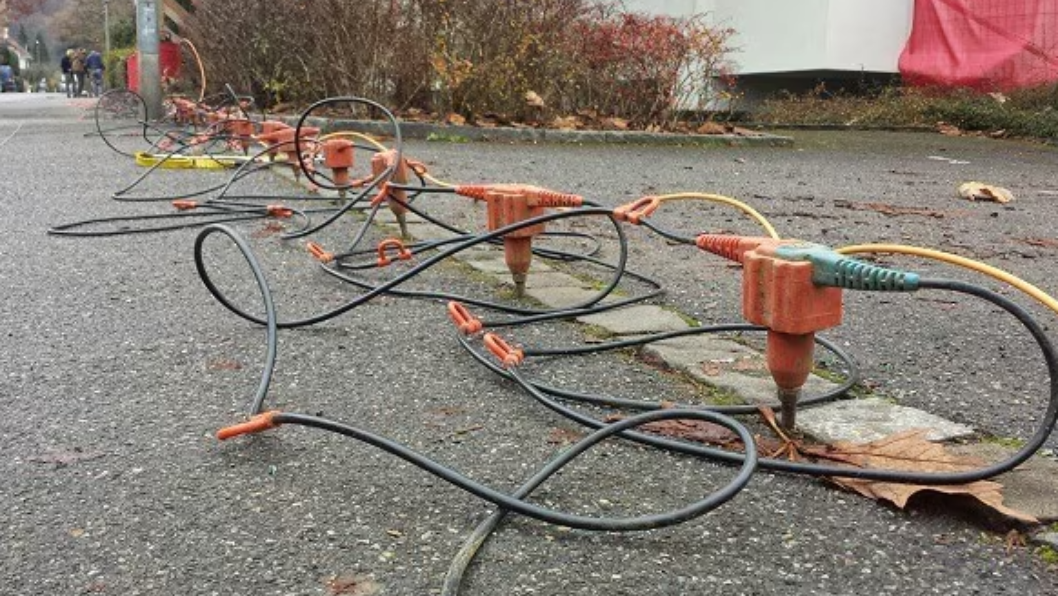
The technique works by generating controlled surface waves and recording how they travel through the ground using multiple sensors placed along the survey line. Since wave velocity changes according to soil stiffness, engineers can estimate the variation of subsurface materials with depth.
MASW testing is commonly used for:
- Building foundation investigations
- Industrial plant development
- Highway and railway projects
- Metro rail construction
- Airport infrastructure
- Bridge foundations
- Large commercial developments
- Seismic site characterization
One reason for its growing popularity is that it offers continuous subsurface information over relatively large distances. Compared with relying solely on boreholes, MASW testing provides a broader understanding of soil conditions between investigation points.
The information obtained can assist engineers in:
- Identifying changes in soil stiffness.
- Estimating engineering properties of subsurface layers.
- Detecting weak zones that require additional evaluation.
- Supporting seismic site classification.
- Improving the overall understanding of ground conditions.
In Chennai, varying soil profiles, coastal deposits, and groundwater conditions often require multiple investigation methods. MASW testing complements conventional geotechnical investigations by providing additional data that enhances engineering interpretation.
Another significant advantage is its non-destructive nature. Since no excavation is required, testing can often be completed with minimal disruption to ongoing site activities. This makes it suitable for both greenfield developments and existing operational facilities.
The results from MASW surveys are typically interpreted alongside borehole logs, laboratory soil tests, and geological information. This integrated approach enables consultants to make more informed foundation recommendations while reducing uncertainty during design.
When selecting a testing provider, engineers should consider technical expertise, equipment quality, project experience, and the ability to interpret results within the context of geotechnical engineering rather than relying solely on raw field data.
Organizations such as NEXGEN INTEGRATED GEOSOLUTIONS PVT LTD support projects by conducting advanced field investigations and integrating MASW results with broader geotechnical assessments. This combined approach helps project teams gain meaningful insights that support engineering design rather than simply generating measurement reports.
As urban development accelerates across Chennai and Tamil Nadu, the demand for reliable subsurface characterization continues to increase. Incorporating MASW testing into site investigations allows engineers to evaluate soil behavior more comprehensively, improve foundation planning, and reduce the likelihood of unforeseen ground-related challenges during construction.